

Travel brings excitement, but it also comes with risks that you can’t always predict, such as flight delays, medical issues, or lost luggage. That’s where travel insurance helps you. Have you ever thought about what it really covers, when to buy it, or how claims work? Many travelers face the same questions before booking tickets.
This blog brings together the most common and essential FAQs about travel insurance, so you know what to expect, what’s not included, and how to get the best value before your next journey.
Introduction to Travel Insurance
Let’s start with the basics: what travel insurance is, why it’s essential, the best time to buy it, and how coverage helps when the unexpected happens.
What is travel insurance, and why is it important?
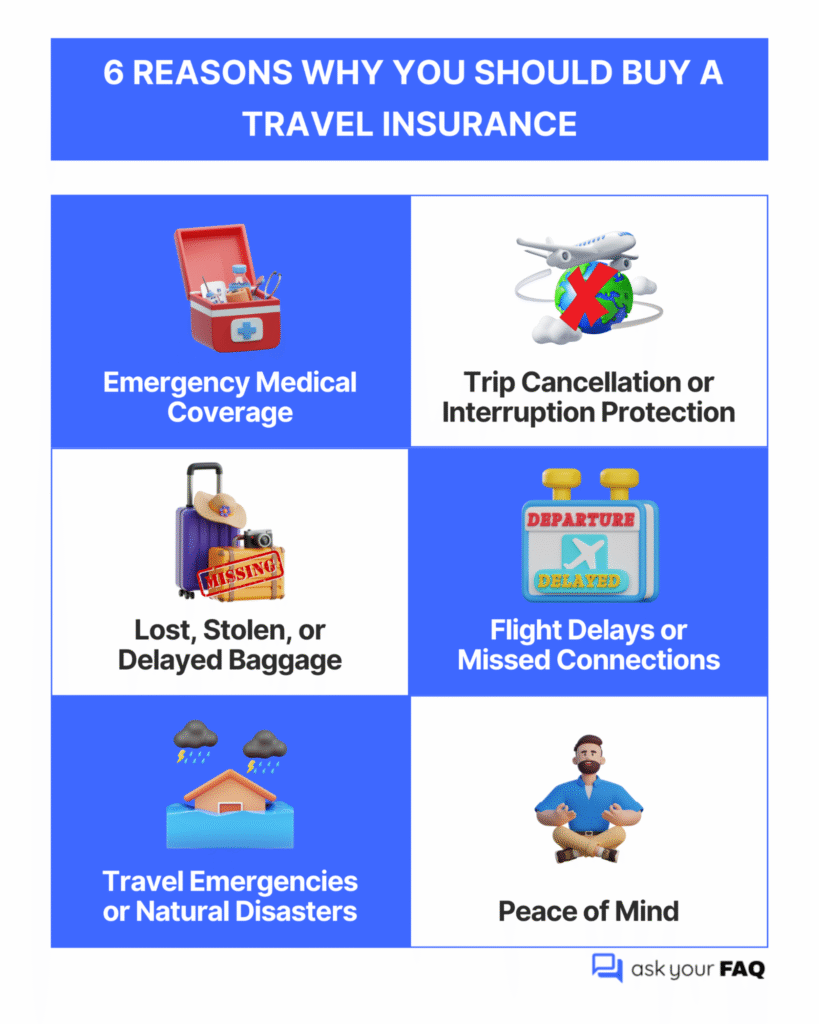
Travel insurance is a type of coverage that protects you from unexpected costs while traveling. It typically includes medical emergencies, trip cancellations, lost baggage, flight delays, and even emergency evacuations. By offering financial protection and support, travel insurance helps you travel with confidence and focus on enjoying your trip.
When should I buy travel insurance, before or after booking the trip?
It’s best to buy travel insurance soon after booking your trip. This way, you’re covered if you need to cancel before departure. Some benefits, like cancellation protection, only start once your insurance is purchased, so buying early gives you maximum coverage.
Is travel insurance mandatory for all destinations?
No, travel insurance is not mandatory everywhere. However, some countries require proof of coverage for entry, especially for medical costs. Even when not needed, it’s strongly recommended to protect against unexpected expenses that can arise during international or domestic trips.
How does travel insurance differ from health insurance?
Health insurance usually covers healthcare in your home country and may not cover you abroad. Travel insurance includes medical coverage overseas plus protection for trip cancellations, delays, and lost belongings, making it more complete for travelers than standard health insurance.
What’s the difference between single-trip and multi-trip (annual) policies?
A single-trip policy covers one journey, from departure to return. A multi-trip (annual) policy covers unlimited trips within a year, usually up to a set number of days per trip. Frequent travelers often save money and effort with multi-trip coverage.
What happens if I try to buy travel insurance after departure?
Most insurers require you to buy travel insurance before leaving your country. Some providers allow purchase after departure, but coverage may be limited. It’s best to arrange insurance before your trip starts to ensure full protection without restrictions.
How can I buy travel insurance for someone else (family or friends)?
You can purchase travel insurance on behalf of family or friends by entering their correct personal details, including full name, age, and trip dates. Many insurers also provide family or group policies, which cover multiple travelers under one plan, making it simpler and often more affordable than buying separate policies.
How do I choose the best travel insurance plan for my needs?
Consider your destination, trip length, health needs, and planned activities. Look for policies that cover medical emergencies, cancellations, and belongings. Compare coverage limits, exclusions, and costs across insurers to find a plan that balances protection with affordability.
What questions do Insurers ask about travel insurance?
Insurers typically request your age, trip dates, destination, and health history. They may ask about planned activities, such as skiing or diving, since some require additional coverage. Honest answers ensure your policy is valid and that claims won’t be denied.
With the basics clear, the next step is understanding coverage and benefits, what’s included in a policy, what’s not, and how it helps during unexpected travel problems.
Understanding Your Coverage & Benefits
Explore the main benefits of travel insurance, such as medical coverage, cancellation protection, lost luggage support, and evacuation services, while also learning what’s excluded.
What does travel insurance usually cover?
Travel insurance often covers trip cancellations, medical emergencies, lost or delayed luggage, and travel delays. Some plans also include emergency evacuation, personal liability, or adventure activity coverage. The exact coverage depends on the policy, so always check inclusions and exclusions carefully.
Does travel insurance cover trip cancellation or interruption?
Yes, most travel insurance plans cover cancellation or interruption if caused by valid reasons like illness, injury, family emergencies, or severe weather. This protection helps you recover prepaid costs, such as flights, hotels, or tours, that you can’t use due to unexpected events.
What kind of medical emergencies are covered in travel insurance?
Travel insurance typically covers urgent medical treatment abroad, including hospital stays, doctor visits, ambulance services, and prescription drugs. Some policies also cover emergency evacuation. Routine check-ups or non-urgent care are usually excluded, so coverage mainly applies to sudden, unexpected medical situations.
Will my travel insurance cover pre-existing medical conditions?
Usually, standard travel insurance does not cover pre-existing conditions unless you buy a plan with special coverage. Some insurers offer waivers if you meet specific conditions, such as purchasing insurance shortly after booking. Always disclose your medical history to avoid denied claims.
What happens if my luggage is lost or delayed during my trip?
Most travel insurance covers lost, stolen, or delayed luggage. You can claim compensation for essential items while waiting for delayed bags or reimbursement for lost belongings. Keep receipts and airline reports, as insurers often require documentation to process claims for luggage issues.
Does travel insurance include emergency evacuation or repatriation?
Yes, many travel insurance policies cover emergency evacuation if you need urgent medical transport to the nearest facility or back home. Repatriation is also covered if you pass away abroad. This benefit helps cover the high costs of medical flights or specialized transport.
Are dental emergencies covered during travel?
Most travel insurance covers dental emergencies caused by accidents or sudden pain, such as broken teeth or infections. Coverage is usually limited to urgent treatment that relieves pain or prevents serious issues. Routine dental care, including cleanings and cosmetic work, is not included.
Can I get coverage for trip curtailment due to family emergencies?
Yes, many policies cover trip curtailment if you must return home early due to a covered family emergency, such as illness, injury, or death of a close relative. This benefit can reimburse unused trip costs and sometimes additional expenses to return home.
Does travel insurance cover if you cancel your trip?
Yes, most policies cover cancellations if caused by approved reasons like illness, injury, family emergencies, or severe weather. You can receive reimbursement for prepaid, non-refundable expenses, such as flights and hotels. Canceling for personal choice, however, is usually not covered unless you add special “cancel for any reason” coverage.
Coverage is only part of the picture. Many people travel with kids, relatives, or friends, so let’s look at how family and group policies work to keep everyone protected.
Family and Group Coverage Options
Learn how travel insurance works for families and groups, including family plans, child coverage, multigenerational trips, discounts, and what happens if one traveler cancels.
Can I buy one travel insurance policy for the entire family?
Yes, many insurers offer family travel insurance plans that cover parents and children under one policy. It’s often cheaper and easier to manage than buying separate policies. Coverage usually applies to all listed travelers for medical emergencies, cancellations, and baggage protection.
Are children automatically covered under a parent’s policy?
Not always. Some family policies automatically include dependent children at no extra cost, while others require you to list them when buying the plan. Always check age limits and rules, as coverage may vary between insurers. Never assume automatic coverage without confirmation.
What is the best travel insurance for families with young kids?
The best plans for families with young kids include strong medical coverage, trip cancellation, and lost baggage protection. Look for policies that also cover childcare emergencies or family-friendly activities. Comparing providers helps you find affordable coverage with benefits designed for parents and children.
Does travel insurance cover pregnancy-related issues while traveling?
Most travel insurance covers medical emergencies during pregnancy up to a certain point, typically in the earlier stages. However, routine check-ups or planned childbirth usually aren’t included. Some policies may cover complications or unexpected emergencies, but it really depends on the provider. It’s always a good idea to check the details of pregnancy coverage before buying a plan.
Can I insure a multi-generational family trip under one plan?
Yes, some insurers allow grandparents, parents, and children to be insured under one family or group plan. Everyone’s name must be listed on the policy. This simplifies claims and may reduce costs compared to separate policies, especially for large family trips abroad.
Are there discounts for group or family travel insurance?
Many insurers provide discounted rates for families or groups traveling together. Buying one policy is often cheaper than individual plans. Discounts can depend on the number of travelers, children’s ages, or trip length, so it’s always worth comparing family pricing options.
What happens if one family member cancels? Does everyone lose coverage?
No, coverage remains for the rest of the family. If one traveler cancels for a covered reason, only their portion of the trip costs is refunded. Other family members can continue with the trip, and their coverage stays active under the same policy.
Does family travel insurance cover activities like amusement parks or tours?
Yes, most family travel insurance covers common activities such as guided tours, amusement parks, and excursions. Riskier activities like scuba diving or skiing may need extra coverage. Always review the list of covered activities to make sure your family’s planned activities are included.
Can I cover non-family members (e.g., friends, babysitter) in the same plan?
Some insurers allow friends, babysitters, or non-relatives to join a group plan, but not all. Family policies often limit coverage to relatives only. If traveling with non-family members, check if a group travel insurance plan is a better fit for your situation.
What’s the best way to compare family travel insurance policies?
Compare policies by looking at medical coverage, cancellation protection, baggage limits, and activity coverage. Check if children are included for free, and review claim limits. Online comparison tools make it easier to see the benefits side by side and choose the most suitable plan.
After understanding family and group coverage, it’s essential to know how to handle claims, what to submit, how long it takes, and common issues.
Filing & Managing Claims
Find out how travel insurance claims work, from filing and required documents to processing times and the help you can get during emergencies.
How do I file a claim for travel insurance?
You usually file a claim online through the insurer’s portal, by email, or by submitting forms. Please provide details about what happened, upload any supporting documents, and follow the instructions. Contact the insurer’s helpline if you need guidance during the claim process.
What documents are needed to support my claim?
Documents depend on the claim type. For medical claims, provide hospital bills and reports. For trip cancellations, show booking receipts and cancellation notices. For lost items, submit a report to the airline or local police. Always keep receipts and official papers to support your case.
How long does it take to process a claim?
Processing time varies, but most insurers take two to four weeks after receiving all documents. Complex claims may take longer. Delays often happen if required paperwork is missing, so providing complete, clear documentation helps speed up the approval process.
Can I file a claim if I cancel for personal reasons?
No, standard policies do not cover cancellations for personal choice, such as changing your mind. Only specific reasons, like illness, injury, or emergencies, are covered. To cancel for any reason, you need a special “Cancel for Any Reason” policy upgrade.
What are common reasons travel insurance claims are denied?
Claims are often denied for missing documents, not reporting incidents quickly, hiding pre-existing medical conditions, or canceling for reasons not covered. Risky activities without coverage add-ons can also cause denials. Always read your policy terms carefully before filing a claim.
Is there a deadline for submitting a claim?
Yes, most insurers require you to submit a claim within 30 to 90 days of the incident. Deadlines vary by provider. Filing late can lead to denial, so report issues and start your claim as soon as possible after the event.
Can I track the status of my claim online?
Yes, many insurers allow claim tracking online or through mobile apps. You can see updates on review stages and payments. If online tracking isn’t available, you can contact customer support for updates by phone or email.
Will the insurer help if I lose my passport or get robbed?
Yes, most insurers offer assistance services for lost passports, theft, or robbery. They can guide you to local authorities, help with emergency funds, or provide documents for your embassy. Coverage may also reimburse costs for replacement passports or stolen items.
Do I have to pay up front and get reimbursed later?
In most cases, yes, you pay upfront and then claim reimbursement with receipts. For larger medical emergencies, some insurers arrange direct payment to hospitals. Always contact your insurer immediately in emergencies to check if direct billing is possible in your situation.
Can I get support while I’m still traveling if an emergency happens?
Yes, most insurers provide 24/7 emergency assistance hotlines. They can help you find hospitals, arrange evacuations, replace lost documents, or guide you in emergencies. You don’t need to wait until you return home to get support or start a claim.
With the claims process covered, the next step is to understand costs, exclusions, and practical tips, so you know what to expect and how to maximize your policy benefits.
Costs, Coverage Gaps & Tips
Understand the cost of travel insurance, the factors that change pricing, key exclusions, and practical tips to avoid surprises while finding the best coverage.
What factors affect the price of a policy?
Key factors include your age, trip cost, destination, trip length, and coverage type. Riskier destinations or activities may result in higher costs. Adding extras like adventure sports or higher medical limits also raises the price. Buying early often gives you more coverage options.
Are there any hidden fees or deductibles?
Some policies have deductibles, meaning you pay part of the cost before insurance applies. Hidden fees are rare, but certain benefits, like optional upgrades, may add to the price. Always check the policy summary for deductibles and exclusions to avoid surprises.
Does alcohol or drug use affect claims?
Yes, if an incident happens while you are under the influence of alcohol or drugs, insurers usually deny the claim. For example, accidents or injuries caused by intoxication are not covered. Responsible behavior is expected for coverage to remain valid.
How can I compare travel insurance plans effectively?
Compare plans by looking at medical coverage, cancellation benefits, baggage protection, and claim limits. Use comparison websites to see side-by-side features and prices. Don’t focus only on cost; make sure the policy covers your needs, including health, activities, and trip type.
Is it better to buy insurance through my airline, travel agent, or independently?
Buying independently often gives more choices and better value. Airline or agent policies may be limited or less flexible. Independent providers let you compare coverage, costs, and benefits across many insurers, helping you find the most suitable plan for your trip.
Are credit card travel insurance benefits enough?
Credit cards may include travel insurance, but coverage is often limited to delays, lost baggage, or basic medical care. They rarely include full medical evacuation or comprehensive trip cancellation benefits. Review your card’s terms and consider buying extra coverage if needed.
What should I check in the fine print before purchasing?
Look for exclusions, coverage limits, deductibles, claim deadlines, and definitions of “covered reasons.” Check if pre-existing conditions or high-risk activities are included. Also, confirm whether the policy covers your destination and trip type. Understanding these details prevents claim denials later.
Any tips for getting the best value on travel insurance?
Buy early to access full cancellation benefits, compare providers online, and avoid over-insuring. Choose coverage that fits your trip, not just the cheapest option. Multi-trip policies may save money for frequent travelers. Look for family or group discounts where available.
Travel Insurance FAQ: What to Remember Before You Travel
Travel insurance may feel like an extra step in your trip planning, but it’s really about peace of mind. From medical emergencies and lost luggage to cancellations and family coverage, the right policy can save you stress and unexpected costs.
By understanding what’s included, what’s not, and how claims work, you can choose coverage that genuinely fits your travel style and budget. Whether you’re traveling solo, with family, or on multiple trips a year, a good plan means you can focus less on worries and more on the journey ahead.