

Unexpected delays, unclear updates, and scattered communication can make any legal case feel harder than it should be. Many clients struggle not because the law is complicated, but because the process inside a law firm isn’t always visible. Files move between teams, deadlines stack up, and messages get filtered through several roles. That creates confusion and wasted effort on both sides. The good news is that understanding how a firm actually manages your case can eliminate most of that stress.
TL;DR
This FAQ blog explains how law firms actually operate behind the scenes, who does what, how cases move, and how lawyers get paid and grow the business.
It’s for clients, new lawyers, and anyone confused by firm titles, workflows, or billing.
Readers get clear answers on roles, management, marketing, scams, income, and brand-specific questions, so they can better interpret firm behavior and communicate more effectively about their cases.
Core Law Firm Definitions
Before getting into specific firms or cases, it helps to clarify the foundational legal terms that appear throughout the discussion.
What is a law firm?
A law firm is a business where licensed attorneys provide legal advice and representation to individuals, companies, or organizations. Firms can be small or large, but most handle case management, negotiations, and client guidance. They operate under professional rules and rely on teams that may include partners, associates, and support staff.
What is a boutique law firm?
A boutique law firm focuses on a specific set of practice areas instead of offering broad services. These firms usually have smaller teams and emphasize deep expertise, personalized attention, and niche strategies. Clients often choose them when they need targeted legal help in a specialized area rather than general representation.
What is a white shoe law firm?
A white shoe law firm is a traditionally prestigious firm known for representing major corporations and financial institutions. These firms are often long-established, selective in hiring, and associated with high professional standards. The term reflects historical reputation rather than any formal category or regulatory designation.
What is a law firm job?
A law firm job includes legal and administrative work that supports client cases. Roles may involve attorneys, paralegals, assistants, intake staff, and operations teams. Tasks range from research, drafting, and filing to client communication and case coordination. Each position helps the firm deliver consistent and organized legal services.
Law Firm Roles & Titles
Covers questions about positions within a law firm, how different roles function, and what responsibilities various titles carry in the firm’s structure.
What is an associate in a law firm?
An associate is a licensed attorney who works under the guidance of partners. They handle research, drafting, negotiations, and case preparation. Associates usually move through levels based on performance, gradually taking on more responsibility as they build experience and work toward potential partnership or senior roles.
What does it mean to make partner at a law firm?
Making partner means shifting from employee attorney to firm co-owner or profit-sharing leader. It’s recognition of legal skill, client development, and steady contribution to the firm’s success. Partners take on higher responsibility, participate in strategic planning, and often help shape the firm’s long-term direction.
How do you make a partner in a law firm?
Earning a partnership usually requires strong legal work, consistent client retention, revenue generation, and leadership within the firm. Attorneys go through evaluations and demonstrate that they can bring in business and support the firm’s growth. Final decisions are typically made by existing partners after reviewing long-term performance.
What is an equity partner in a law firm?
An equity partner owns a share of the firm and receives profit distributions rather than a fixed salary structure. They participate in major decisions, financial planning, and long-term strategy. Their income depends on the firm’s overall performance, making them directly tied to business outcomes.
What is a senior partner in a law firm?
A senior partner is a highly experienced attorney who often holds major client relationships and significant influence over firm direction. They guide strategy, mentor lawyers, and handle high-value or complex matters. Their role combines leadership, client management, and long-established industry knowledge.
What is a managing partner in a law firm?
A managing partner oversees the firm’s business operations, finances, staffing, policies, and strategy, while still practicing law. They act as both executive leader and senior attorney, ensuring the firm runs efficiently and remains aligned with long-term goals. It’s a blend of management and legal work.
What is a shareholder in a law firm?
A shareholder is an attorney who owns equity shares in a firm that uses a corporate structure. They receive profit distributions and have voting rights on major decisions. This role functions similarly to a partnership in traditional firms, giving lawyers both ownership and governance responsibilities.
What does of counsel mean in a law firm?
“Of counsel” refers to a lawyer connected to the firm in a role that’s not partner or associate. They may be semi-retired, part-time, or highly specialized advisors. The position provides flexibility and allows the attorney to contribute expertise without full managerial or partnership duties.
What is of counsel at a law firm?
This title describes a lawyer who maintains a formal but limited relationship with the firm. They often focus on specialized legal work, consultation, or part-time involvement. The role offers flexibility and expertise without the expectations that come with partnership or associate positions.
What does an intake specialist do at a law firm?
An intake specialist is usually the first point of contact for new clients. They gather initial case details, assess eligibility, enter information into the system, and schedule consultations. Their work helps attorneys quickly understand whether the firm can take the case and ensures a smooth onboarding process.
Law Firm Management & Operations
Focuses on the internal workings of a law firm, including how decisions are made, how teams are organized, and how core administrative tasks are handled.
How to manage a law firm?
Managing a law firm means keeping staff coordinated, cases organized, and finances on track. You’re balancing compliance, client communication, and strategic planning at the same time. Strong billing systems, predictable workflows, and clear expectations help the firm operate smoothly and reduce risks while supporting consistent client service.
How to manage a small law firm?
Small firms benefit from simple, efficient systems. Clear task assignments, streamlined intake, organized calendars, and reliable cash flow make daily operations much easier. Using practical technology and targeted marketing helps a small firm maintain steady clients without stretching limited resources. Consistency is key when the team is small.
How to start a law firm?
Starting a firm involves defining the services you’ll offer, choosing the right business structure, and setting up office tools and policies. You’ll need a realistic budget, marketing plan, and case management system. Preparing these elements early helps you attract clients and handle work efficiently from day one.
How much does it cost to start a law firm?
Startup costs depend on your location, office setup, and practice type. Expenses usually include licensing, insurance, software, marketing, and optional office space. Solo firms often begin with lower budgets using virtual tools, while multi-attorney firms require higher initial investment for staffing and infrastructure.
How do lawyers get paid in a law firm?
Lawyers are paid through salaries, bonuses, contingency fees, billable-hour credit, or profit-sharing, depending on the firm’s structure. Compensation varies by seniority and practice area. Revenue generally comes from client work, and lawyers’ pay often reflects their contribution to the firm’s billings, results, and long-term client relationships.
How to negotiate a debt settlement with a law firm?
To negotiate a debt settlement, start by confirming the debt details and requesting supporting documents. Then discuss possible payment plans or reduced payoff amounts. Keep communication clear and ask for written confirmation of any agreement. Documentation protects both sides and avoids misunderstandings once a settlement is finalized.
How to value a law firm?
Valuing a law firm involves reviewing revenue trends, profit margins, client relationships, reputation, and the stability of ongoing work. Analysts may use earnings multipliers, asset-based calculations, or goodwill evaluations. The goal is to understand how predictable the firm’s future income will be based on its current performance.
Can the bar take over a law firm?
Yes, in serious situations, the bar or a court can step in. This usually happens when ethical violations, misconduct, or abandonment put clients at risk. A trustee or receiver may be appointed to manage or close the firm, ensuring client files and funds are properly handled.
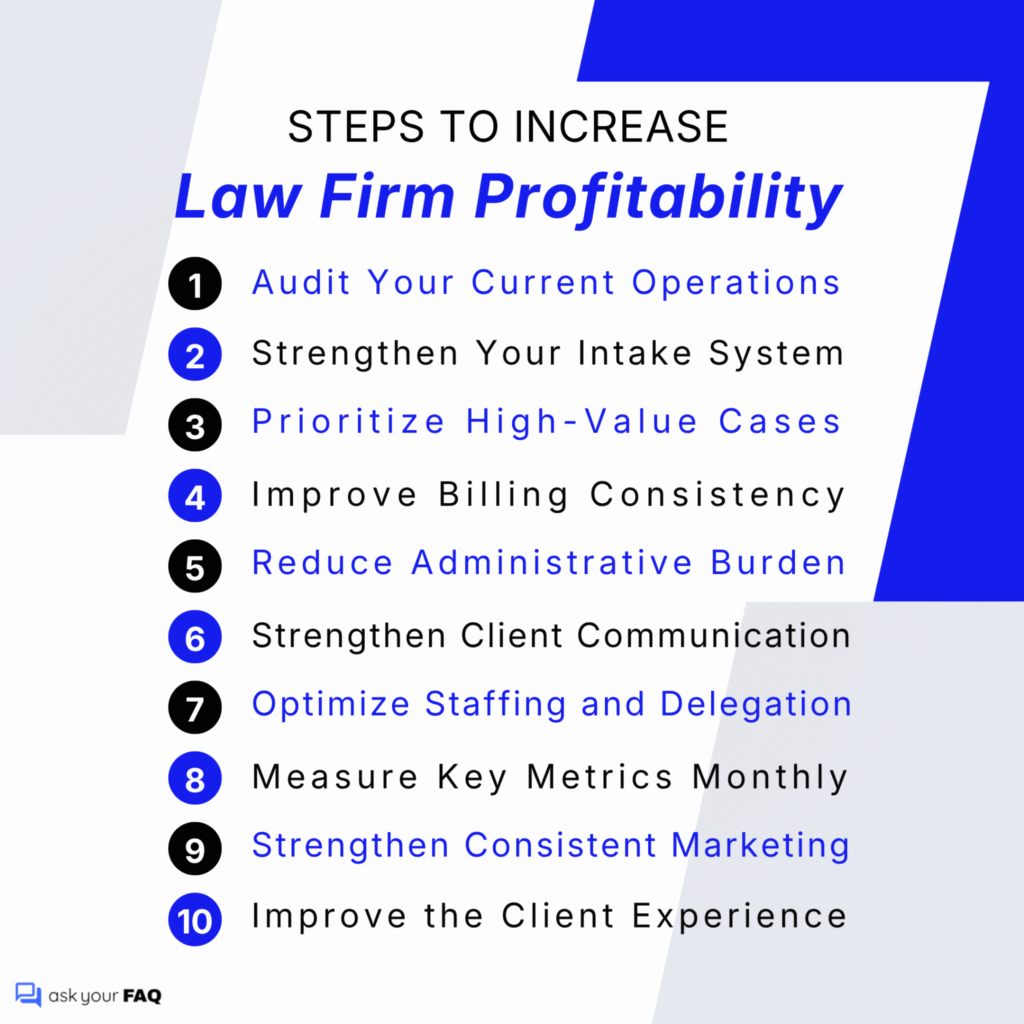
How to increase law firm profitability?
Profitability grows when workflows are efficient, intake is strong, and expenses are controlled. Focusing on higher-value practice areas, improving billing accuracy, and maintaining consistent marketing all help.
Using data to track performance and adjusting staffing or processes can significantly raise long-term financial results.
Law Firm Marketing & Business Development
Applies to discussions about how law firms position themselves, generate client inquiries, and manage ongoing business growth activities.
How to market a law firm?
Marketing a law firm starts with building a strong online presence, clear website content, helpful articles, and active profiles on major platforms. Pair that with solid reviews, targeted outreach, and consistent branding. The goal is to show potential clients exactly what you offer and why you’re a reliable choice.
How to advertise a law firm?
Advertising a law firm usually involves digital ads, social media promotions, and local directory listings. You can run targeted campaigns to reach people looking for your practice area. Just make sure every ad follows your state’s legal advertising rules so your messaging stays compliant and transparent.
How to market a small law firm?
Small firms get great results by focusing on local SEO, community involvement, and niche content tailored to specific client needs. With a smaller budget, targeted strategies work better than broad campaigns. Strong branding and clear messaging help small firms stand out without spending heavily.
How to increase law firm business?
Growing a law firm usually starts with improving your intake process, boosting online visibility, and strengthening client communication. Quick follow-up, organized workflows, and consistent review management make a big difference. Happy clients often become a major source of referrals, which naturally increases business.
How to market a law firm on Instagram?
Instagram works well when you use simple visuals, quick explanations, and educational posts that answer common questions. Showing your team, sharing short legal tips, and keeping branding consistent help build trust. Authentic, helpful content tends to get more engagement than overly promotional posts.
How much should a law firm spend on marketing?
Most firms set aside about 5–15% of their revenue for marketing, depending on how competitive their practice area and location are. Newer firms or firms in crowded markets may need to spend more. The key is aligning the budget with realistic growth goals.
Scam Prevention & Legitimacy
For topics involving legitimacy checks and fraud awareness, this section focuses on how to evaluate authenticity and avoid misleading legal claims or deceptive practices.
How to spot a fake law firm?
Verify the attorney’s credentials with your state bar first. Confirm the firm has a real physical address and contact details that can be independently checked. Be cautious if you see:
- High-pressure communication
- Guarantees of specific legal outcomes
- Requests for unusual or upfront payment methods
- Websites with generic text, missing attorney names, or vague service descriptions
- Difficulty reaching anyone by phone or email
Legitimate firms provide clear credentials, transparent fee structures, and verifiable professional information. Fraudulent operations tend to avoid specifics and make it hard to confirm who is actually representing you.
Is Marble Law Firm legit?
Marble Law is a legitimate, BBB-accredited law firm, but customer feedback is highly mixed. Some clients highlight its flat-fee structure and accessible communication, while others report issues such as poor follow-through, limited updates, and concerns about billing practices.
Is PRA law firm legit?
PRA Law Firm, PLLC (Palmer Reifler, P.A.) is a legitimate law firm that handles civil recovery matters for retailers. The notices they send are civil demand letters, and many attorneys note that these letters seldom lead to actual lawsuits. However, responses and recommendations can vary depending on the case and local laws.
Is Milberg Law Firm legit?
Yes, Milberg Law Firm is a legitimate, nationally recognized practice with a long history in class-action litigation. The firm has operated for more than 50 years and has secured billions in recoveries for clients across a wide range of cases.
Is Pulaski Law Firm legitimate?
Pulaski Law Firm, operating as Pulaski Kherkher, PLLC, is a legitimate legal practice based in Houston, Texas. The firm is established in the industry and is known for handling personal injury, class-action, and mass-tort cases on a national level.
Is Watts Guerra Law Firm legitimate?
Watts Guerra LLP was a legitimate national law firm, but it has undergone major changes. The organization split, rebranded as Guerra LLP, and co-founder Mikal Watts resigned. Although the firm previously handled notable cases such as the California wildfire litigation, recent online reports mention concerns about delayed payments and case dismissals. The firm no longer operates under the original Watts Guerra name.
Law Firm Contact & Collection
This header identifies questions related to how law firms communicate, send notices, or attempt to collect information or payments, separating these issues from general legal practice topics.
Why would a law firm call me?
A law firm may contact you about a pending claim, verification of documents, court-related notices, debt collection, or information linked to a case involving your name. Some calls relate to outreach for representation.
Always confirm the caller’s identity using official contact details before sharing personal or financial information.
Why is Shafer Law Firm calling me?
Shafer Law Firm may call regarding documents, an existing file, debt-related inquiries, or a matter involving your information. Their outreach could also relate to verifying details connected to a legal proceeding. To ensure accuracy, confirm the call using the firm’s published contact information rather than relying solely on the incoming number.
Who does Gurstel Law Firm collect for?
Gurstel typically represents creditors in debt collection matters, including financial institutions, lenders, and businesses seeking repayment. Their role is to pursue owed balances through communication, negotiation, or legal action.
Anyone contacted should verify the account details, request documentation, and confirm the firm’s legitimacy through official channels before responding.
How much do law firm partners make?
Law firm partners earn through profit-sharing, billable work, and performance-based bonuses. Income depends on firm revenue, client base, and partner role within the organization.
Equity partners generally receive larger distributions tied to firm profits, while non-equity partners earn structured compensation with potential incentives linked to productivity and client development.
How much do law firm owners make?
Law firm owners draw income from firm profits, case fees, and operational performance. Earnings depend on practice area, market demand, staffing costs, and business efficiency.
Owners managing high-volume or specialized practices often see higher returns, while firms with higher overhead or inconsistent caseloads may produce more variable income.
Brand-Specific & Case-Specific Queries
This header flags queries tied to specific firms or cases, separating them from general legal topics so readers can identify brand-focused and case-focused questions more easily.
Is Morgan and Morgan a good law firm?
Morgan & Morgan is a large national firm known for personal injury and mass tort work. Its size means experiences differ across offices and attorneys. Clients often evaluate the specific team handling their matter, communication style, and case fit rather than relying on overall brand reputation.
Where is Morgan and Morgan Law Firm located?
Morgan & Morgan operates offices across many U.S. states, with its headquarters in Florida. The firm expands through regional branches, allowing clients to access services in multiple markets. Availability and practice focus vary by location, so clients typically check nearby offices for relevant case support.
Is Jacoby and Meyers a good law firm?
Jacoby & Meyers is a consumer-focused firm providing services in areas like injury, family law, and bankruptcy. Client experiences vary depending on attorney assignment and location. Evaluating reviews, communication quality, and attorney background helps determine whether the specific office aligns with a client’s legal needs.
What happened to Dan Broderick law firm?
The Dan Broderick matter is tied to a widely publicized personal case involving family conflict rather than the firm’s business operations. The events surrounding it relate to individual circumstances, not structural changes or legal industry issues. It remains known primarily due to the personal history involved.
What law firm is handling the Camp Lejeune lawsuit?
Several national firms handle Camp Lejeune water contamination claims, particularly those experienced in mass tort and environmental injury cases. No single firm controls the litigation.
Many claimants choose firms with established resources for large-scale claims requiring medical documentation, exposure evidence, and federal claim procedures.
Closing Insights: What Clients Need to Know About Case Management
When legal updates slow down, or replies go missing, it’s easy to feel like your case is drifting. Most of the time, the issue isn’t neglect; it’s simply the complexity of law firm workflows. Files move between teams, deadlines shift, and communication gaps appear.
Understanding how these systems work helps you avoid wasted effort and missed opportunities. With the right clarity, you can stay informed, ask better questions, and keep your case on track. Use this FAQ as a guide whenever the process feels unclear.